

For decades, traditional marine surveys have been the backbone of vessel safety, compliance, and asset integrity. They remain one of the most important safeguards in the maritime industry, providing expert, on-site assessments carried out by trained professionals who understand ship structures, corrosion behavior, and operational realities.
That has not changed.
What has changed is the environment in which those surveys now operate.
Today’s marine industry is facing growing complexity. Fleets are ageing, operational cycles are tightening, regulatory scrutiny is increasing, and owners are under constant pressure to control costs without compromising safety. At the same time, the volume of inspection data being generated has grown significantly, often without a clear way to extract long-term value from it.
Traditional surveys are still critical, but on their own, they are no longer enough to meet modern demands.
The Continued Importance of Traditional Marine Surveys
Before discussing limitations, it is important to be clear on one point: marine surveys are not outdated, and they are not being replaced.
Surveyors bring experience, judgement, and context that no automated system can replicate. The ability to visually assess damage, understand vessel history, interpret structural behaviour, and make professional calls in complex environments remains essential.
Every reliable inspection still begins with a qualified surveyor on board the vessel.
Traditional surveys provide:
- Verified, first-hand condition assessments
- Compliance with class and regulatory requirements
- Professional interpretation of defects and deterioration
- A trusted basis for maintenance and repair decisions
However, the role of the surveyor is becoming more demanding, not less.
Where Traditional Surveys Begin to Struggle Today
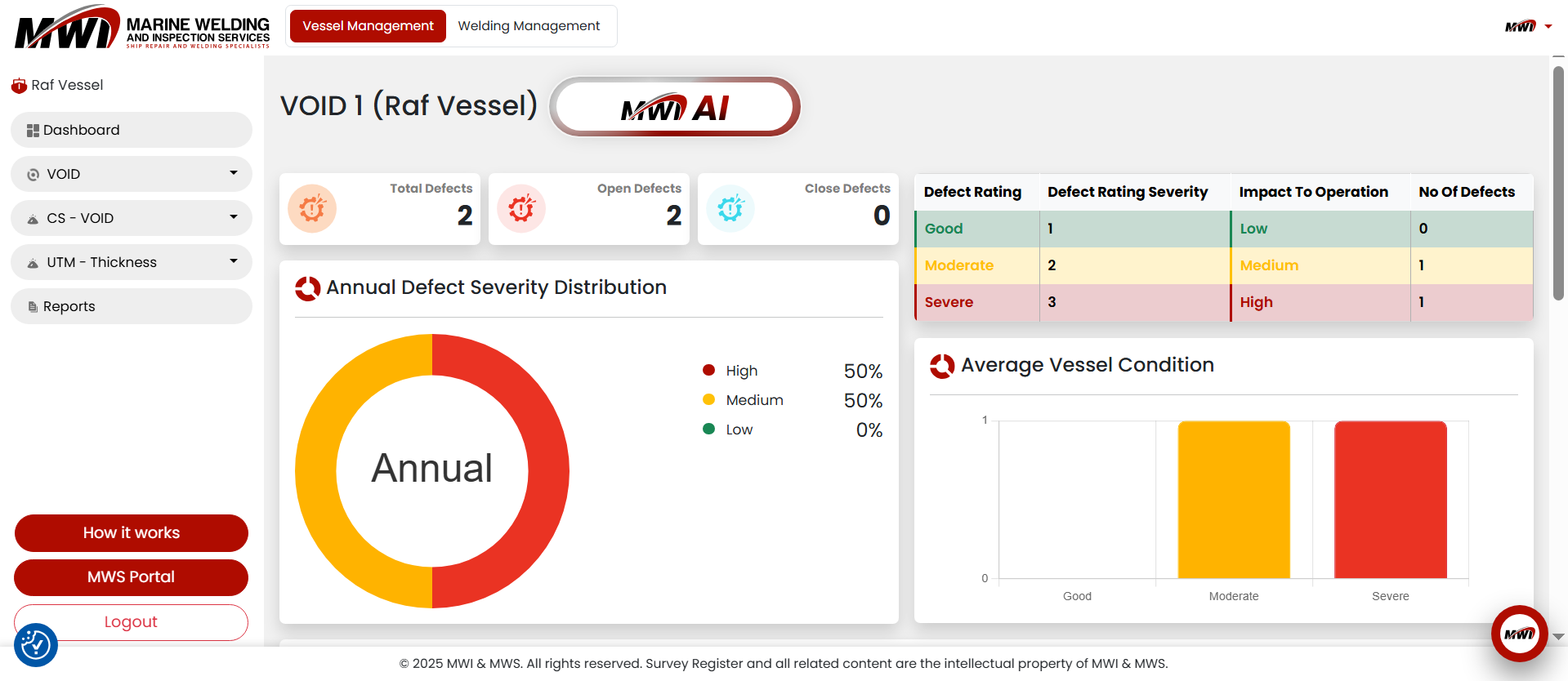
The challenges do not lie in the survey itself, but in what happens after the inspection.
Many organisations still rely on static reports, PDFs, spreadsheets, and isolated datasets. Over time, this creates several structural issues.
1. Static Data
Inspection reports capture a snapshot in time. Once filed, they often sit unused until the next inspection, making it difficult to track deterioration trends or emerging risks across multiple survey cycles.
2. Fragmented Records
Inspection data is frequently spread across systems, departments, or even different service providers. Comparing findings across vessels, years, or surveyors becomes time-consuming and error-prone.
3. Manual Interpretation at Scale
As fleets grow and inspections increase, manually analysing large volumes of data becomes increasingly difficult. Subtle patterns, early warning signs, or correlations between defects can be missed simply due to workload.
Rising Pressure from Fleets, Compliance, and Cost Control
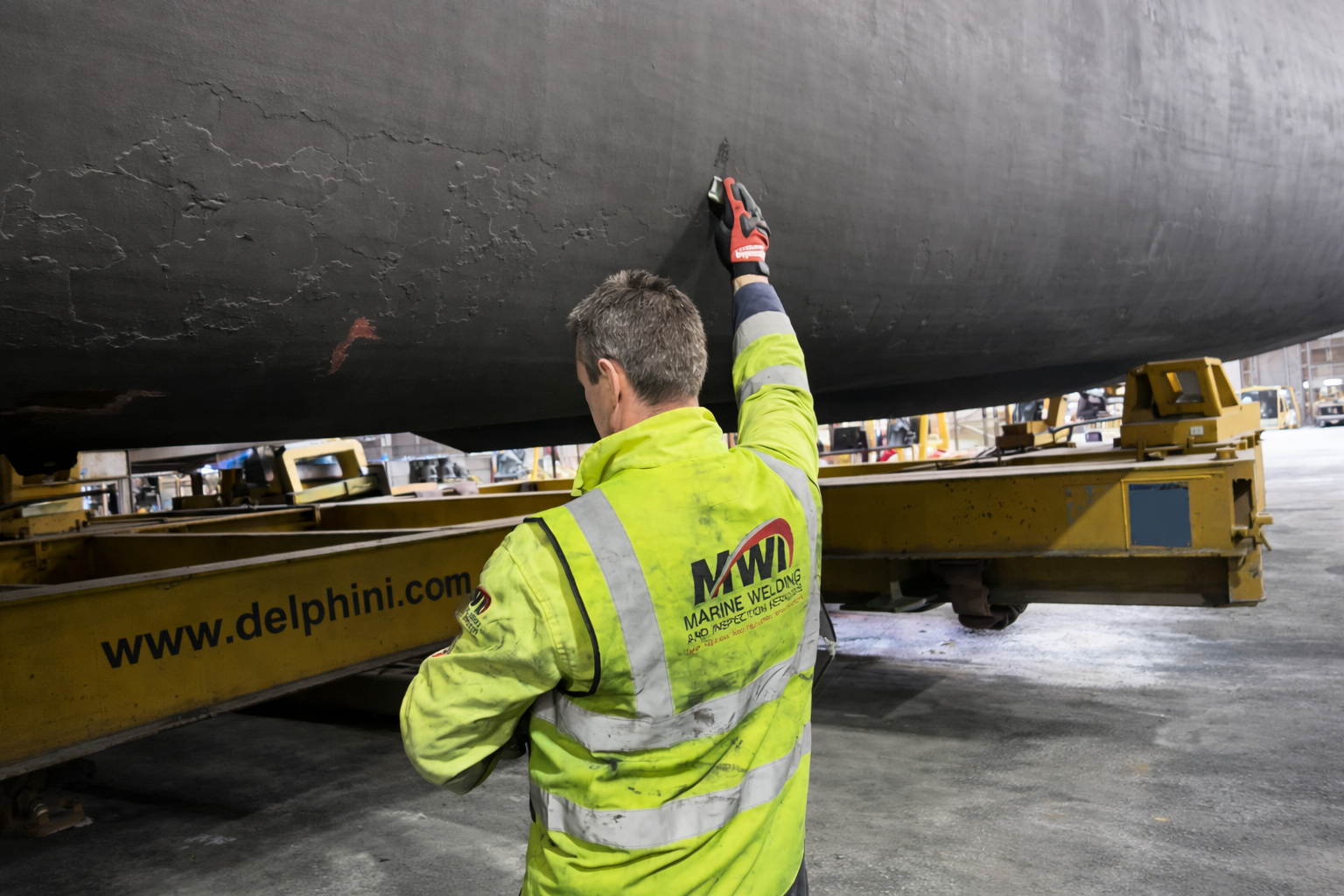
The modern marine environment is unforgiving of inefficiency.
Owners and operators must manage:
- Ageing vessels operating beyond original design assumptions
- Tighter maintenance windows and off-hire constraints
- Increasing regulatory and class scrutiny
- Higher repair costs driven by late-stage defect discovery
Decisions are no longer based solely on individual inspection findings. Stakeholders now need answers to broader questions:
- Is this defect isolated or part of a wider trend?
- How does this vessel compare to others in the fleet?
- What is the projected risk if action is delayed?
- Where should limited maintenance budgets be prioritised?
Traditional inspection reports were never designed to answer these questions on their own.
Why Inspections Now Need an Intelligence Layer
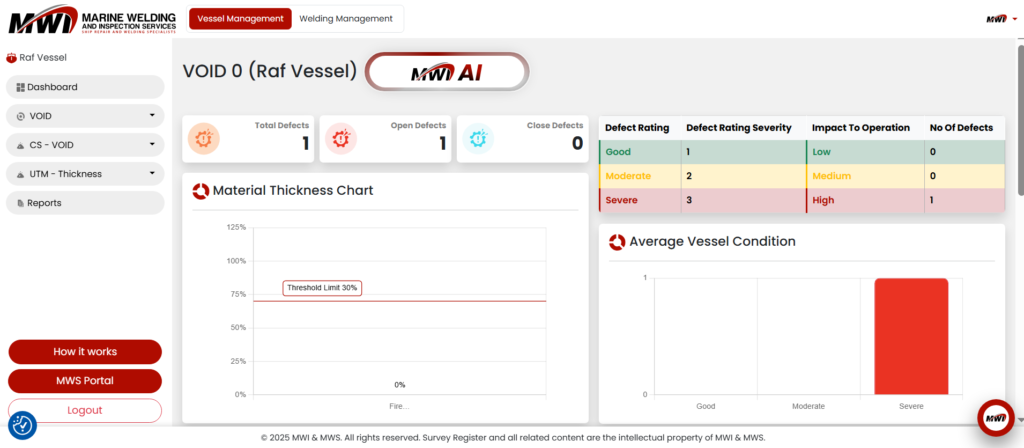
This is where the industry is evolving.
Inspection intelligence does not replace surveys. It builds on them.
By analysing inspection data across time, vessels, and structures, an intelligence layer can:
- Identify recurring defect patterns
- Highlight areas of accelerated deterioration
- Provide consistency across surveyors and reports
- Support better-informed maintenance planning
- Reduce reliance on memory, spreadsheets, and manual cross-checking
In simple terms, it helps organisations move from reactive reporting to proactive insight.
MWI AI as an Enhancement, Not a Replacement
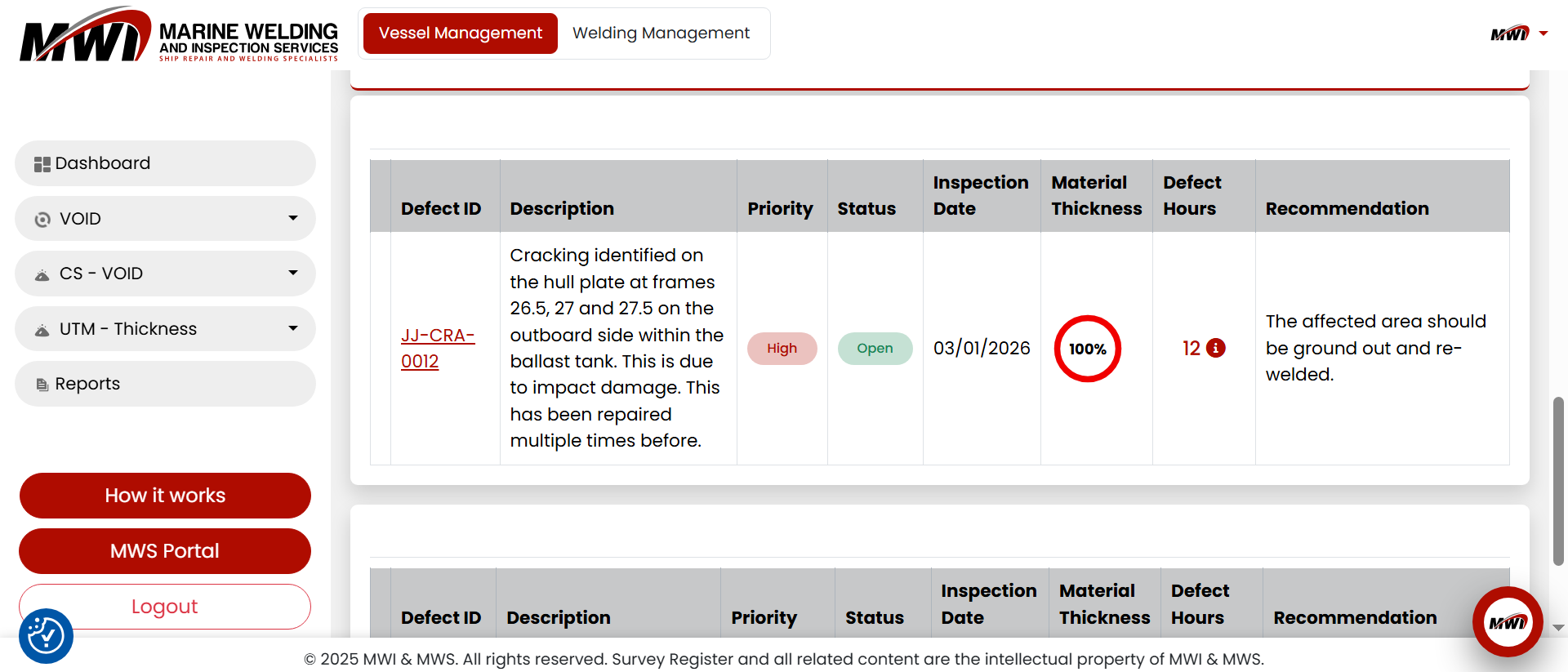
MWI AI has been developed with a clear philosophy: support professionals, do not replace them.
The platform is designed to work with traditional marine surveys by providing intelligence on top of inspection data that already exists. Surveyors continue to inspect, assess, and report. MWI AI helps ensure that the knowledge captured during those inspections is not lost, underused, or siloed.
By structuring, analysing, and interpreting inspection data, MWI AI enables:
- Better visibility across survey cycles
- Earlier identification of risk trends
- More informed discussions between technical teams and decision-makers
- Stronger continuity of knowledge across fleets and years
The survey remains the foundation. Intelligence makes it stronger.
A Natural Evolution, Not a Disruption
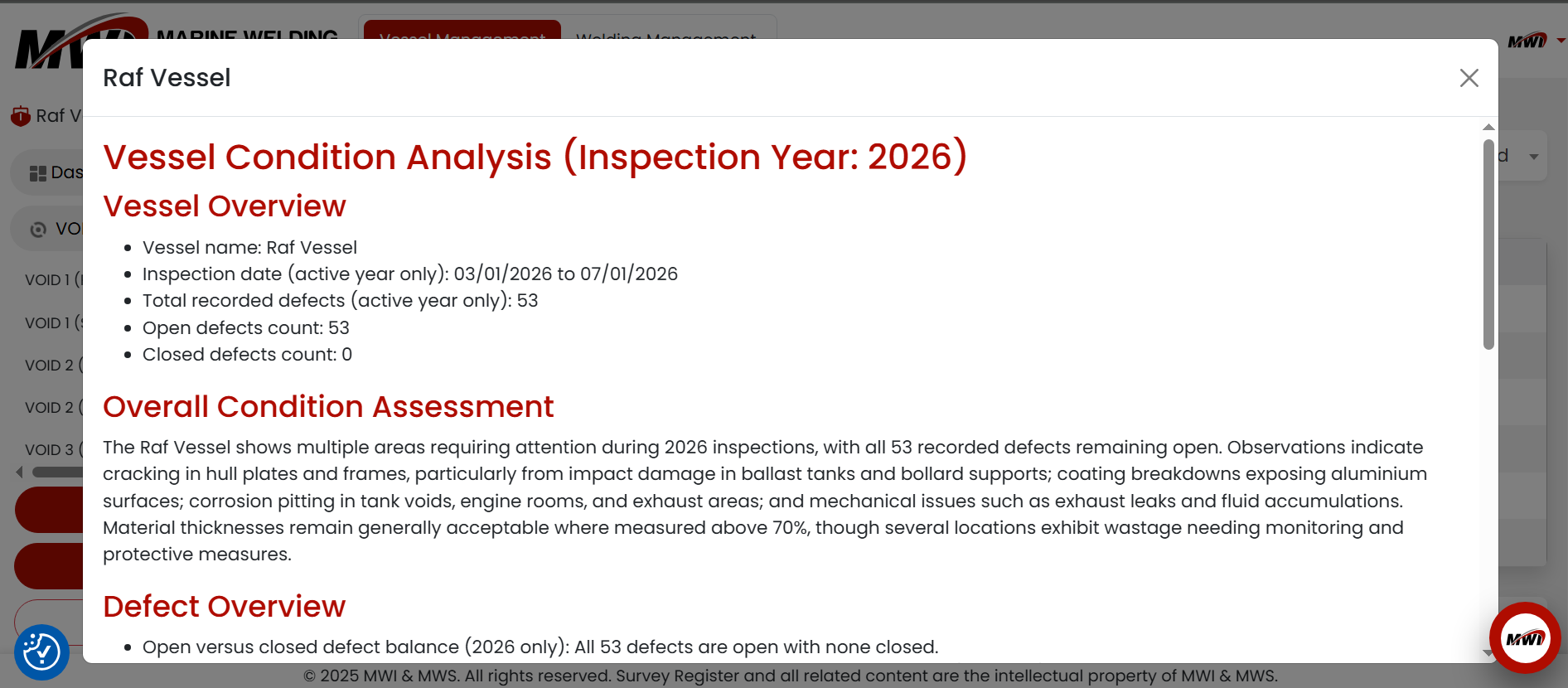
The marine industry has always evolved cautiously, for good reason. Safety, reliability, and experience matter. The shift toward inspection intelligence is not a rejection of traditional practice, but a response to the realities of modern asset management.
As vessels age, data volumes grow, and operational pressure increases, relying solely on static inspection reports becomes increasingly difficult. Enhancing vessel surveys with intelligence allows organisations to see further, plan better, and act earlier.
The future of marine inspections is not about replacing expertise.
It is about ensuring that expertise is supported, amplified, and carried forward.
The Evolving Role of Marine Inspections
As marine assets continue to operate in increasingly demanding conditions, the role of inspections will remain fundamental to safety and compliance. However, the expectations placed on inspection outcomes are evolving.
The ability to learn from inspection data over time, rather than treating each survey as an isolated event, will become an essential part of asset integrity management. The future of marine inspections will remain grounded in professional expertise, supported by systems that help ensure insights are retained, compared, and applied consistently across survey cycles.
About MWI AI
MWI AI is an intelligence platform developed to support marine surveys, inspections, and asset integrity management. Built around real inspection workflows and industry experience, the platform enhances how inspection data is analysed, understood, and applied across vessels and fleets.
For further information or enquiries:
Email: martin@mwi.services