
Structural threats in marine vessels that remain completely invisible to the naked eye are one of the greatest risks in the marine industry. Hidden corrosion behind key systems can quietly compromise vessel integrity until it is detected. And it often happens when it’s too late.
Vessel owners, shipyards, and marine surveyors who are responsible for operational safety and regulatory compliance find it a challenge to identify hidden risks. Traditional marine vessel surveys and ultrasonic spot checks have limited capabilities.
A recent inspection done by Marine Welding Inspection (MWI) demonstrates how our “Advanced Phased Array Corrosion” combined with data-driven analysis uncovered a critical defect that might’ve resulted in operational disasters.
This blog shows a glimpse of how MWI engineers identified a structural issue that can be described as a “ticking time bomb” during a routine dry dock inspection of a 40-metre aluminium passenger ferry and the unmatched capabilities of MWI AI.

How a Routine Scan Led to an Unexpected Risk in a Vessel
As part of the regular drydock maintenance, the ferry was inspected for corrosion. The team checked the aluminium outer hull for any signs that the metal might be wearing down.
Using advanced Phased Array Ultrasonic Corrosion Scanning, MWI technicians began mapping the hull thickness across multiple sections of the vessel. At first, there were no signs of damage. The exterior hull appeared structurally sound. Traditional inspection methods would likely show results that the vessel is good to go.
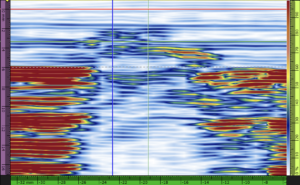
With the intelligent features of MWI AI, the phased array scanner revealed that something was wrong with the engine room’s hull area. There were no physical defects on the surface but the ultrasonic imaging told an entirely different story. It exhibited material loss and all of it led to a deeper investigation of the area.
Finding Hidden Thinning Beneath the Surface
A closer examination of the inspection data revealed a serious structural problem. The aluminium hull plating in the affected area was originally 6 mm in thickness, designed to give the vessel the required structural strength. It was the exact thickness designed to deal with operational loads and environmental stresses.
The phased array imaging showed the plate had thinned significantly. It had reduced down to just 1.8mm. It represented a loss of more than 70% of the original material thickness. This stage of degradation shows that the hull plate was at a severe risk of failure. Repeated vibration, mechanical stress, fatigue, and other operational stresses could lead to cracking and failure.
For a passenger ferry, this condition was a considerable safety risk. A hull breach in the engine room area could eventually lead to rapid flooding, operational shutdown, and safety risks for those on board. The most concerning was the unnoticed level of damage.
Investigating the Root Cause
Then, to determine the cause of material loss. MWI engineers carried out a detailed internal inspection of the engine room. They carefully removed sections of the fire-protection insulation that covered parts of the structure. Behind the insulation, they found the cause of the damage.
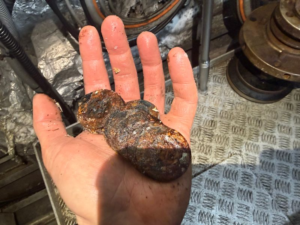
The detailed examination revealed that a number of steel washer caps had been left unattended during the original construction of the vessel. These pieces of steel had long been covered with the insulation and were in contact with the aluminium hull plate.
This created galvanic corrosion, where the aluminium gradually damaged and corroded the steel components. Moisture trapped behind the insulation sped up the process of deep pitting and thinning of the hull plate. The problem remained hidden for years.
What Most Traditional Marine Surveys Miss
This case is the perfect representation of how traditional marine surveys are limited. Visual inspections just give information about the surface. Corrosion in hidden areas is hard to identify unless the area is physically dismantled. The whole process is expensive and time-consuming.
Phased Array Ultrasonic Testing changes the approach entirely. Instead of one-on-one measurements, phased array systems can easily analyse problems in larger sections of material using electronically controlled ultrasonic beams. This capability of MWI AI made it easier to detect a defect that would otherwise have remained hidden.
How MWI AI Turns Inspection Data into Actionable Intelligence
Advanced scanning technologies are powerful tools and they also generate large volumes of inspection data. Interpreting this data to find a suitable action becomes a complex task for fleet managers and vessel operators.
This is where MWI AI plays a major role in giving marine inspection a completely new dimension. MWI AI is designed to analyse structural data gathered through inspection and turn it into clear, actionable insights that marine engineers and vessel operators can use. Instead of manually reviewing readings, operators can identify damaged areas and vessel parts that need maintenance.
In cases like this, the combination of advanced scanning and intelligent analysis ensures hidden risks are detected, understood, and addressed. MWI AI’s role in transforming data to strategies and repair solutions cannot go unnoticed. Read more on how MWI AI adds real value in From Inspection Data to Actionable Intelligence: How MWI AI Adds Real Value.
How Early Detection Prevents Hull Failure Before It Happens
Once the engineers found the root cause of the corrosion, they removed the steel washer caps and made necessary repairs to re-establish the structure of the hull. The problem was found on time and a severe operational accident was prevented. The timely repair of the ship prevented the following:
- Potential damage to the hull
- Flooding of the engine room
- Emergency repair time taken
- Major repair costs
- Risk to life of passengers and crew
With the early detection and maintenance by the professionals, an issue that would have been a devastating failure was fixed.